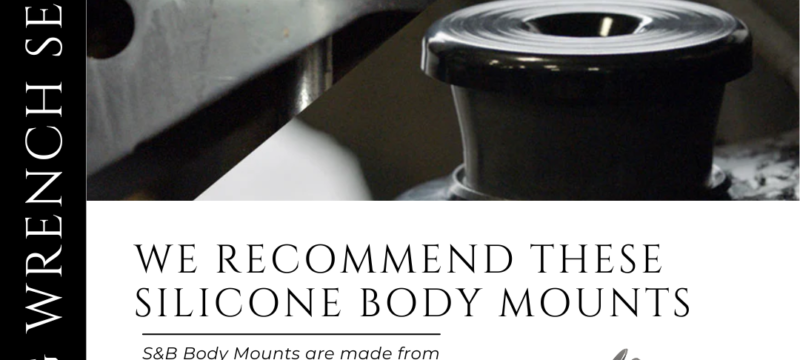
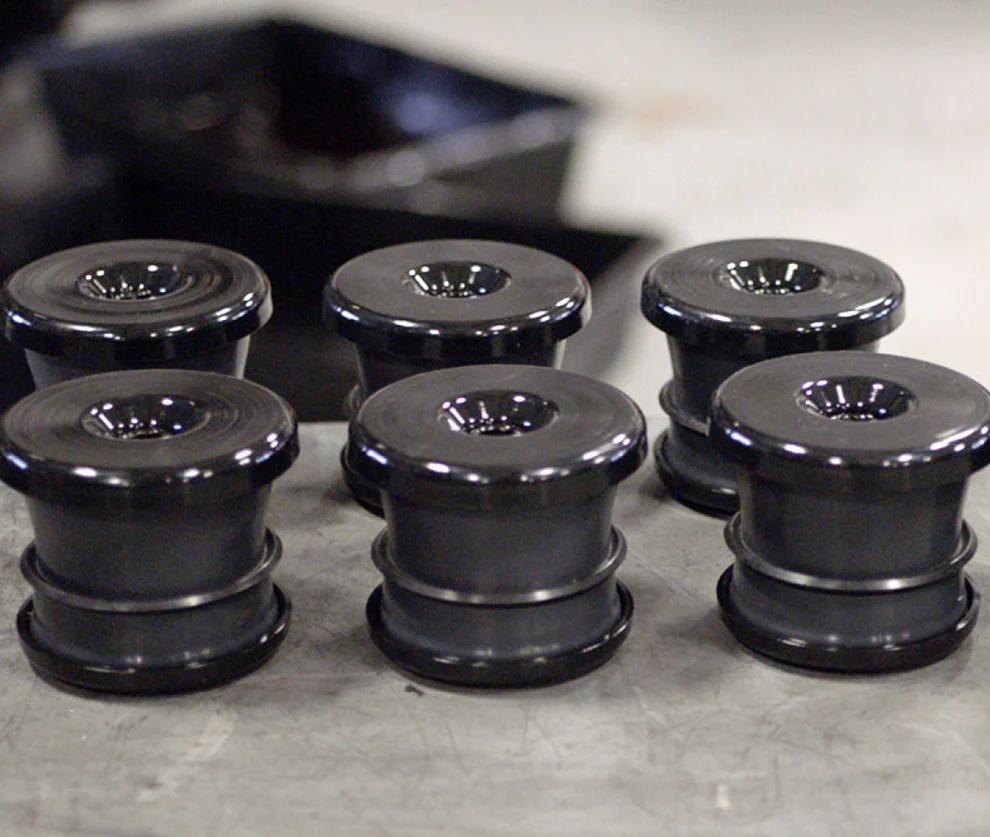
If you’re like me, your truck is getting older, stuff is in need of some fixing, but hey, it’s paid for. One of the most annoying issues to chase on a rig is a noise, a squeak, a click, a rattle, whatever it is, they can be a chore to find the source sometimes. The funny thing is cab mounts can make all the noises and then some. S&B filters have a whole like of silicone body mounts. They cover Ram from 2003-2009, Ford from 1980-2016 and GM from 2001-2014.
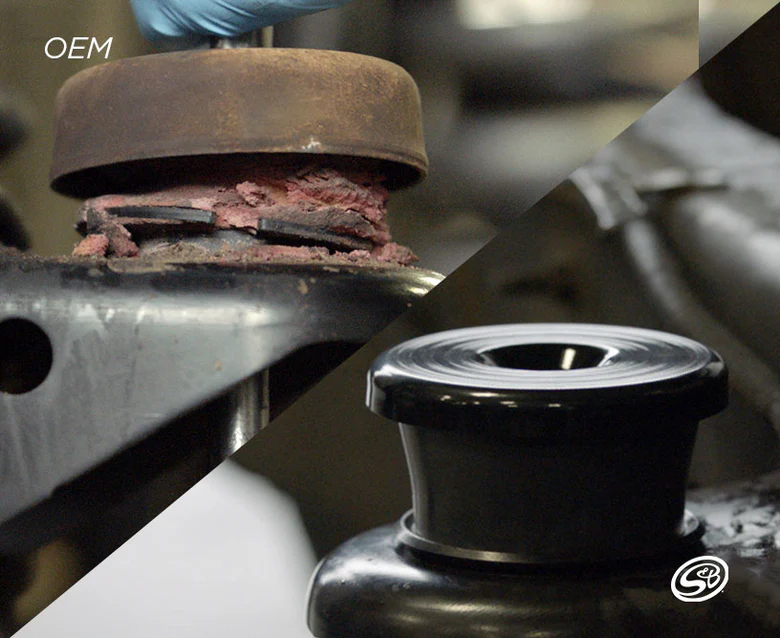
MADE FROM PREMIUM SILICONE. S&B Body Mounts are made from premium silicone, so they won’t deteriorate like stock. Silicone resists heat and ozone and will last the lifetime of your truck which is why we give a lifetime guarantee.
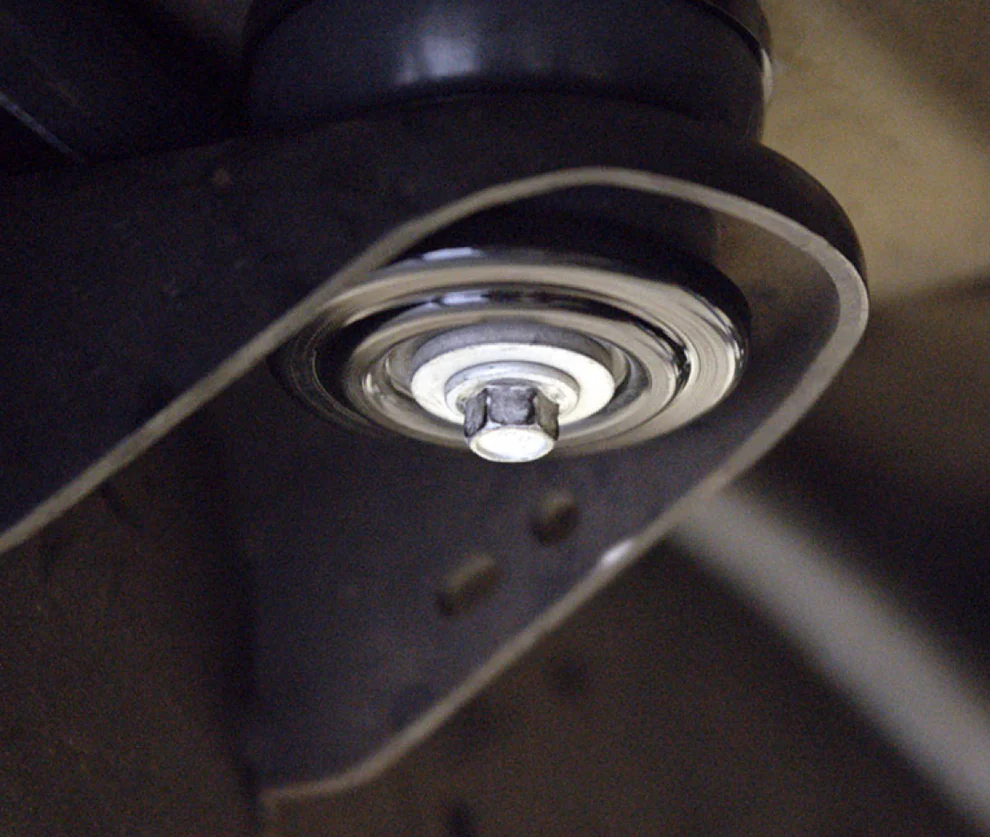
NEW OEM BOLTS INCLUDED. Your family will be safer. Ford, Chevy, and Dodge instruct dealers to only use new bolts once body mounts are removed. The reality is that most dealers just reuse the same bolts to save you money, which could cause the cab and frame to separate. All S&B Body Mount kits come with OEM designed bolts, so the dealer has no reason to reuse the old bolts.
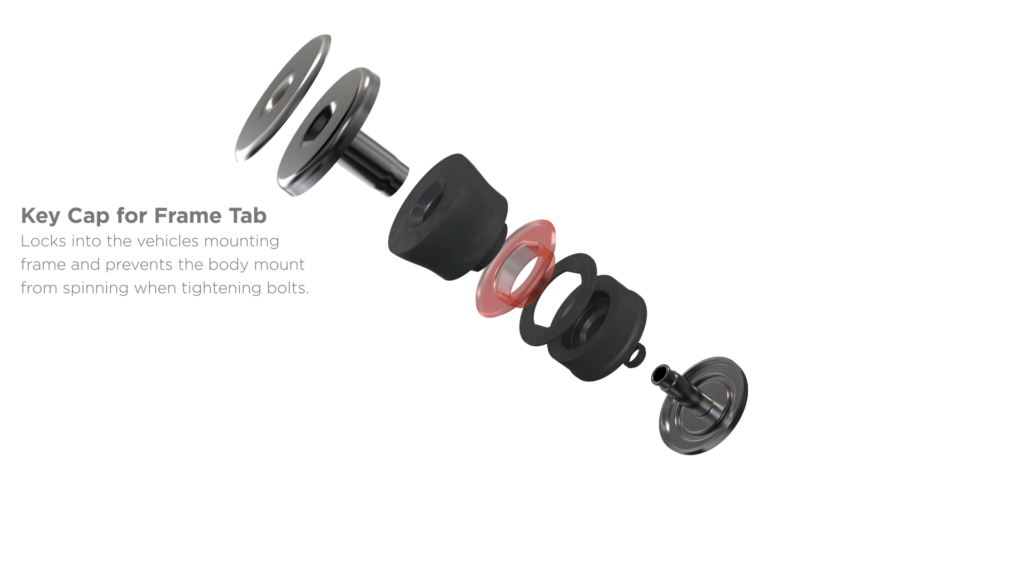
CAP KEYED FOR FRAME TAB. Locks into the vehicle’s mounting frame and prevents the body mount from spinning when tightening bolts. This makes for an easier installation.
LIFETIME GUARANTEE ON PARTS AND LABOR. All S&B Silicone Body Mounts are built to last and are backed by a lifetime warranty on parts and labor. Must be installed per Chevy/GMC, Ford, or Dodge installation Instructions. $150 cap on labor.
Whether you have an early 2000’s truck or a new truck, the more information at your disposal the better. The easiest way to achieve this is the Edge CTS-3 monitor. It is a monitor that plugs into the obd2 port, simple plug and play. The convenient thing about the CTS-3 is the EAS add-ons. Whether it is an EGT Probe, back up camera, sensors or switches. The CTS-3 can run them all with the expandable EAS system. You can pull diagnostic code, perform regens, do performance tests and data logging. It is also compatible with most gas applications as well.
If you’re looking for a little extra horsepower they can offer that. Whether it is the Juice with Attitude or the EZX Module Edge has you covered. All of Edge’s products have EO Numbers (where needed) keeping the threat of the Fed’s wrath at bay.
We stock the CTS3 and the EGT probe kit at the shop for your convenience. So if you have any questions feel free to call the shop at 360-638-0044 or email george@flyingwrench.net
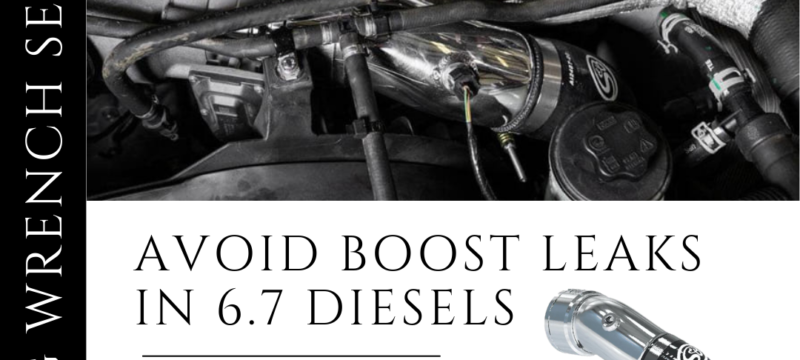
If you have a 2011- 2024 Ford with the 6.7 diesel, there is a possibility you will have boost problems. The OE intercooler pipes are made from problematic plastic and are prone to failure. Boost leaks can cause a range of problems, from fuel economy to emissions issues. The cure to this is S&B’s Intercooler pipe and boot kits.
The S&B Cold Side Intercooler Pipe replaces the failure-prone OEM intercooler pipe that is known to burst and leave you stranded.
Larger than stock 3.50” diameter polished aluminum CAC pipe.
Stronger 5-Ply Aramid Reinforced Silicone Hose.
Less Restriction. Improved airflow. Better performance.
2-piece design for easy installation.
On most years this can be paired with the hot side intercooler pipe kit as well.
The goal is to fix a problem right the first time.
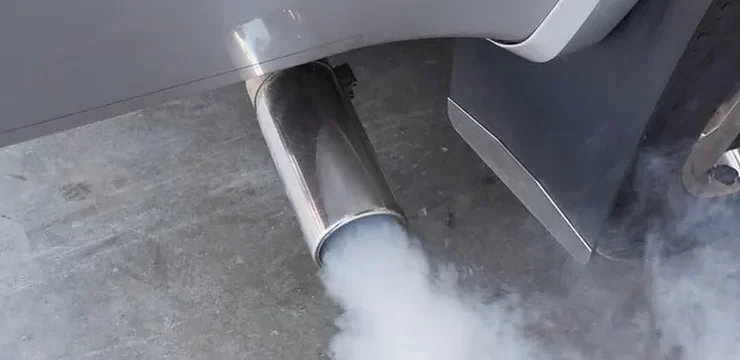
There are several reasons that you may be considering upgrading your exhaust and wondering if the cost is worth the benefit of enhancing your ride. Often overlooked, the exhaust plays an important part of how a vehicle performs and functions. The main job of the exhaust is to circulate air through the engine and exit it out the back of the vehicle. There are a few things to consider before purchasing a new system and we want to help walk you through reasons you may just want to change out your factory exhaust.
Better Returns
By upgrading to an aftermarket exhaust, not only do you receive improved horsepower, but better fuel mileage as well. Stock exhausts are created to perform a job. They are more restrictive, quieter and are a better cost to the manufacturers. Typically, a stock exhaust is made of steel which will rust over time. After market exhausts are produced to maximize efficiency with better materials like aluminum or stainless steel. Aftermarket exhausts allow more air to your engine, which will increase your power and fuel efficiency. Depending on which type of exhaust you determine is best for your vehicle will depend on the increase of power and fuel economy.
Aesthetics
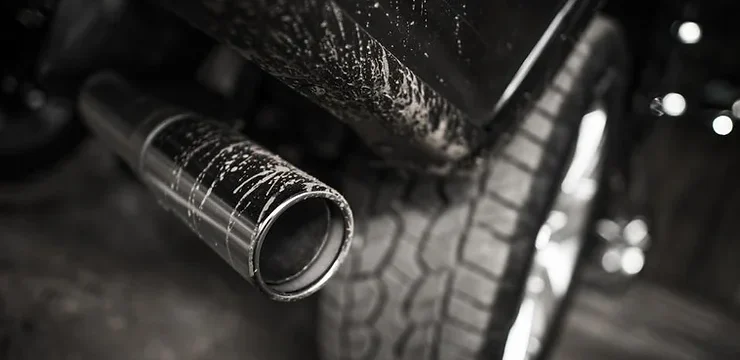
Once you have a ride you really care about, you most likely want to bring it to the next level. The brilliance of the shiny exhaust and tips will be an attention grabber. After market exhausts let you stand out in a crowd, be unique and add a level of luster to your vehicle.
Music to Your Ears
If enhanced performance and having an eye-catching ride isn’t enough, there is also a change in sound with an aftermarket exhaust. The distinguishable sound of a superior exhaust system will turn heads. A vehicle sounds more powerful and a bit meaner when you opt for a new exhaust system. Who needs a great sound system when your exhaust can be music to your ears?
If you’re interested in upgrading your stock exhaust to a performance enhancing, eye catching, unmistakable sounding aftermarket exhaust, we’re here to help.
We love our diesel truck and all the horsepower that those big, beautiful engines put out while we are hauling down the highway, but if there is any one thing we can say we love more… it’s our planet. That having been said, our favorite trucks aren’t always kind to our planet’s atmosphere when they start aging, so here are some things you can do with that bad boy that can make it better for our eco-system.
Change your oil – I know this sounds like a no brainer, but keeping up with regular oil changes will definitely help keep down harmful emissions in your truck, and it will only serve to help keep that beast running for you for a long time.
Keep your air filter clean – Once again, sounds pretty simple and it really is. Standard upkeep of your truck such as changing your air filter is essential for lowering the emissions of your truck. The harder your engine has to work, the more emissions it produces.
Maintain proper tire pressure – If your tire pressure is low, you can see an decrease of up to 20% in fuel economy, which means more emissions per mile you drive.
Reduce Idle Time – If you are going to be waiting for someone or something in your truck for more than a minute, you should shut off your engine. Many people believe that starting your truck would use more fuel than just leaving it on, but that’s not true. No need to keep it running unless you are ready to go.
Change up your driving style – I know it’s always fun to let your engine rev up high and sound like you’re on a race track going down the highway, but if you want to help keep your emissions down and fuel economy up, don’t rev your engine so high, change gears lower, brake sooner, and slow down. It will also help increase the life of your engine.
It’s not hard to see that by just doing a little bit of general upkeep and changing a few minor things about how you drive, you can really help reduce your carbon footprint with your truck. It’s also worthwhile to note that all of these things will also help when it comes to the longevity of your engine’s life. So make sure you keep your truck in tip top shape and treat it right and that will ensure that you also help keep our environment and atmosphere the same way.
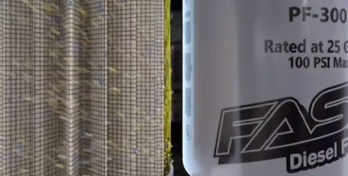
A coalescing style filter is a fuel filter which is designed to separate vapors, liquids, soluble particles, or oil from some other fluid through a coalescing effect. As fuel travels through the system, water coalesces (or builds up) on the outside of an element and then sheds to the bottom and drains when the system is shut down.
But do your filters really need this a coalescing style filter, and does it improve performance?
Truth be told, most of these drain-style filters are not capturing the water they were designed to stop. Instead, water passes right through the drain and directly into your injection system. No Bueno! That is the biggest reason why our partners at Fass stopped manufacturing their filters with a drain.
It is extremely important that the flow rating of the filter matches that of the pump. With a coalescing filter, efficiency tends to drop as flow rates rise. So Fass decided to make a change and went to a synthetic media with a water blocking filter and no drain. They call this the “Extreme Water Separator.”
Since the change, Fass Fuel Filters remove approximately 99% of water from your fuel and they do not have a coalescing drain. In comparison, the average competitor’s coalescing filter removes approximately 66%. Additionally, the extreme separator has also shown that it stops particulates down to 2 micron absolute in a single pass!
The extreme water separator attracts and locks water to it and does not let water drain to the bottom when the system shuts down. It is designed to keep the water locked into place. Therefore, a drain was no longer needed. With the new Extreme Water Separator, you can also rest easy knowing that your injection system is safe and efficiency won’t drop as flow rates increase.
Christmas is right around the corner and many of us will have to travel at least once to attend holiday celebrations. Some of us get to stay pretty close to home, while others may have longer trips ahead of them. These longer drives may require some planning, and while your fill in the blank may offer better miles to the gallon, the truck cannot be overlooked as your own personal sleigh this Christmas.
After all, do you think Santa would still choose the Reindeer if he had an entire fleet of sweet trucks stacked with the best aftermarket upgrades? I think not.
So let’s review the top reasons your should drive your truck to Christmas Celebrations in 2024.
You’re the Ultimate Santa
Building off of our Santa reference, what do you think can carry the largest, most badass Christmas gifts – the family car or the truck? Not only do you have enough power and room to pull all of those big gifts around, but you’re going to look cool while doing so.
You Could Be Someone’s Hero Imagine driving to or from your Christmas event and you see someone stuck in a snowbank on the side of the road – Wouldn’t it fill you full of Christmas cheer to give them a pull out of there? You could be someone’s hero! This actually happened to me in 2002 and some bro in a Duramax helped me out. (Editors Note: Thank you Duramax dude, I still owe you a beer.)
You Could Be Your Own Hero What if you went into the ditch? You can save face, time and a few hundred swear words if you just take the truck.
Towing Power Could Be Useful After Desert If you’re anything like me, you may be looking forward to dinner and desert more than anything this Christmas. And if you are planning on trying a little bit of everything (like I am) than you might head back home with a few extra pounds above your belt. It’s times like these that a little extra horsepower can do us some good.
Rudolf’s Nose Or A Sweet LED Bar? Driving a car to Christmas is like being led by Rudolph’s nose. Sure, it will get you from point A to point B but nothing lights up the road better than your truck decked out with some cool aftermarket LED lights. Afterall, safety should be the #1 priority here…
So get on out there in those Cummins, Duramax, and Powerstroke trucks and start delivering some Christmas cheer in 2025!
Heavy Machinery is one of the most expensive pieces of equipment you own. It’s also expensive to repair or replace. To get the most out of your equipment and money, we recommend creating a consistent maintenance routine. Our expert mechanics have put their minds together to provide you with tips that will help extend the life cycle of your heavy equipment.
Tip 1: Create A Preventative Maintenance Routine or Program
Preventative maintenance (PM) helps to anticipate changes in the health of your heavy equipment. Corrective actions should be taken regularly to ensure reliability and performance. This would include regular system inspections, modifications, and replacements of components. The benefits to a PM program include:
Less Likelihood for detrimental breakdown
Improved reliability
Improved resale value
Avoid expensive parts replacement
Extend equipment life
Better parts inventory management
Tip 2: Identify Issues That Could Cause Breakdown
Identifying potential causes of breakdown before they occur could save you hundreds or thousands of dollars and will help to maintain scheduled workflow. There are three types of heavy equipment failure: Sudden failure, intermittent failure, and gradual failure. These types of failure are often due to one of these causes:
Mechanically induced failure – The easiest to recognize and prevent. Mechanically induced failure is often caused by overexertion, vibration, shock, collision, or operator error. You can prevent mechanically induced failure by replacing parts when needed, lubricating tightening fasteners, and ensuring all moving parts are properly aligned.
Thermally induced failure – This happens when extreme temperatures cause breakdowns. It can be easily avoided by performing checkups and tune-ups when entering a seasonal change where temperatures will drastically increase or decline.
Erratic Failure – The most difficult to detect. Erratic Heavy Equipment failure happens randomly and under varying conditions. Some common reasons for erratic failure include overloads on hydraulic or electrical systems, and software or hardware malfunctions. Erratic failure is preventable by using diagnostic equipment during maintenance checkups.
Tip 3: Get to Know Your Machine
Equipment knowledge is necessary when developing a maintenance routine. Be sure to read the equipment’s user manual and contact a professional (such as Flying Wrench Services) if you have any questions. Do not rely on YouTube videos because opinions always vary and you will want to be sure you are listening to tips from a true professional with the credentials to back it up.
Listen to your operators. If they indicate that you may be dealing with a potential issue then you will want to diagnose the issue. Do not operate the equipment if an operator has noted changes or issues with performance.
Tip 4: Train Your Employees on Proper Operation
Knowledgeable operators are more productive, cause less wear and tear on equipment, and can often be very helpful in identifying potential issues. Proper training is crucial not only for productivity, but for protection of the equipment and employee.
A proper training program can create a cohesive unit follows all procedures in caring for your equipment. Be sure all operators read the equipment manuals. You may want to invest in a training video because so many folks learn best from visual content. Provide testing at the end of the training process to ensure that the employee processed the information correctly.
Tip 5: Follow Factory-Recommended Maintenance Intervals
Factory-recommended maintenance intervals are a minimal standard and are based on normal operating conditions. They may vary based on climate and temperature, or environmental conditions such as dust, snow, ice, humidity, rain, etc.
Following these factory recommendations and keeping precise records will help you protect the warranty on your equipment. Many warranties are no longer valid if you deviate from the factory-recommended maintenance intervals.
Tip 6: Create A Checklist and Document Service History
Creating a checklist allows you to document each machine’s service history. This documentation should include the date each inspection was performed, they type of service that was performed, which parts were replaced or repaired, and any other notes that may be useful in the future.
Tip 7: Pay Attention to Fluids
One of the most important aspects to optimal health in heavy equipment is checking and maintaining fluids. Engine oil, diesel fuel, coolant, and hydraulic fluid are all extremely important indicators to the health of your equipment.
Tip 8: Monitor Condition of Your Equipment
If you choose to have your inspection and servicing done here at Flying Wrench Services, your machine will be in good hands. Our services will save you time and money and keep your machines on-schedule. We provide services such as advanced fluid diagnostics, service history monitoring, and site assessments so we can dive deep into the overall condition of your machine.
The Heavy Equipment Inspection Checklist
Start your inspection from the ground and work your way up. Be sure your inspection is “machine specific” and add categories if necessary. For example: wheeled machines would require some different checklist components than a tracked machine. Flying Wrench Services offers site inspections and in shop services that provide you the documentation you will need to update your records.
As an extremely important component of your Heavy Equipment’s cooling system, coolant can help prevent cavitation, corrosion, freezing, and rust. A periodic inspection of your Heavy Equipment’s coolant can provide information that is important to performance and health.
Most heavy-duty antifreeze is approximately 95% ethylene glycol and 5% water and additives. Approximately 1% of all antifreeze is manufactured using from propylene glycol, which is less toxic but more expensive than ethylene glycol. When glycol is mixed with water, coolant is created. Most coolant is 30% – 50% glycol. Additives are incorporated to fight corrosion, rust, scale, and they also help to protect wet cylinder sleeves from cavitation.
Choosing the right coolant and periodically inspecting it can work wonders for your cooling system. Follow these recommendations for optimal cooling system health and performance.
Buying Coolant for My Heavy Equipment
• Check to see if the coolant you purchase for your Heavy Equipment states that it complies with ASTM standard D-6210 on the package.
• Deionized water should be used for all Heavy Equipment coolant. Most (if not all) diesel coolants should be prediluted.
• When you find a coolant you are happy with, stick with it. Never mix them. Always follow the maintenance suggestions from the manufacturer.
Coolant Maintenance Recommendations
• Periodically conduct visual tests. The coolant should be clean and free of rust coloration.
• Get a heavy equipment coolant analysis test kit. The recommended interval for testing is 1,000 hours.
• Be sure to note the color changes on the test kit strips as they can indicate freeze/boil point (glycol content) and nitrite levels. Some test strips will also indicate PH balance.
For more information on coolant, ask a diesel technician at your next visit to Flying Wrench Services or call us today at: (360) 638-0044.
Do we dare celebrate the end of winter here in Washington? I sure hope we can! And if this is indeed the case, you will want to start preparing for warmer weather. Winter consists of harsh weather that can really do a number to your truck. As the weather starts to warm up, you will want to “take stock” of the impact it had and prepare for the nice weather ahead to ensure it’s in good driving condition. This can lead to some general maintenance and potential repair work. You may also want to reconsider any potential performance upgrades that you have considered in the past.
When it comes to Spring check-ups for your truck, Flying Wrench Services performs a full 100-point inspection. If you are a DIY truck owner, you can use this list to make sure you’ve considered these major factors as well.
Under the Hood
Check Engine Oil – This may seem like a no-brainer, but you will want to check levels and top it off if you have some time before your next change. Of course, it’s best to just do a change altogether and start Spring off on a fresh note.
Check and Top Other Fluids – Again, this may be a no-brainer but this goes beyond just a simple washer fluid and coolant check. You will also want to be sure to check and top-off your gear oil, transfer case fluid, DEF (when applicable) and transmission fluid.
Check the Battery – Winter can put a lot of strain on a battery. Check the terminals for corrosion and if you suspect any issues that may not be visible, bring it into our shop.
Check or Change Air Filters – Be sure to check air filters for debris buildup and if they are close or beyond their sell-by-date, replace them. Additionally, check your cabin filters to ensure proper functionality of the air conditioning.
Outside of Truck Maintenance
Check Windshield Wipers – Constant use during the wintertime can beat up your wipers in a hurry. We will check and replace them if a replacement is needed.
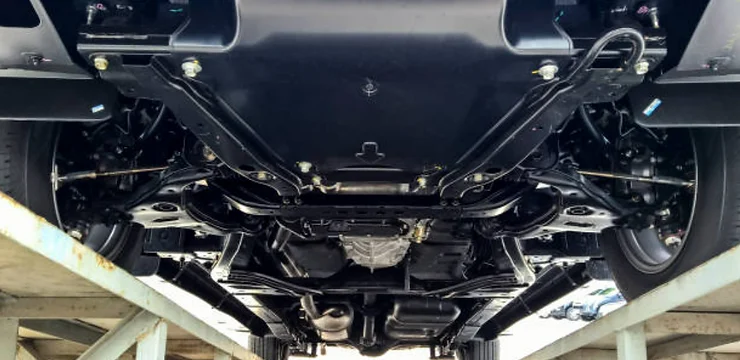
Undercarriage – This includes an inspection of the u-joints, driveline, steering and tracking components, and suspension components. If you are inspecting these components yourself, be sure to look for looseness and impact damage in the ball and socket joints. The best time to grease applicable components is when the load is off the steer axle. For the u-joints, look for looseness and rust in the roller ends. Also inspect the propeller shaft for damage and if the balance weights are present.
This is just a quick rundown of the important things to look for when performing a Spring check-up on your truck. If you think your needs go beyond a simple check-up and that you’re in need of wholesale replacements, it’s best to bring your truck to our shop. Our 100-point inspection will make sure that no stone is left unturned as we prepare you for off-road adventures and Springtime fun!